
What does cost to insure an EV and how can you get those premiums down? Our guide explains all
With new petrol and diesel cars being phased out in favour of electric, increasing numbers of motorists are facing the prospect of insuring an EV for the first time.
But what will it cost them to do so and how can they reduce the pain? We have the answers…
Is electric car insurance more expensive than for other car types?
According to Confused.com, a comparison site, the average electric car insurance premium in May 2024 was £910 compared with £790 for a hybrid vehicle and £670 for a petrol or diesel car.
In the same month, Rival Go.Compare reported average EV insurance premiums to be £641 compared with £467 for all other vehicle types.
Why is it more expensive?
Because electric cars (EVs) and their technology are newer and more complex, meaning the cars themselves are expensive to replace when written off and because parts can take longer to source and cost more.
There are also fewer technicians and garages qualified to work on EVs, which also increases delays and pushes up workshop costs. According to Solera, an automotive data company, repair costs for EVs are up to 29% higher than for petrol and diesel cars.
Some specialist policies also include many extra features specific to EVs which all come at a price.
Many EVs pack a punch, too, with acceleration times that would shame a hot hatch. This has caught out a lot of inexperienced drivers and resulted in greater claims numbers.
For a long time, it was also believed that EVs were more expensive to insure because of the eagerness of insurers to write them off after any accident that threatened the integrity of the battery.
A replacement battery can cost many thousands of pounds; often more than the car itself is worth.
However, as the industry’s confidence in and knowledge of EVs develops, new evidence from data experts Cap HPI shows that proportionally fewer EVs are now being written off than petrol and diesel cars.
Is EV insurance different from regular cover?
In essence, no but for the most comprehensive EV cover you might want to go with a specialist policy.
Most offer cover for over-the-air software updates and recovery to a charge point if the car’s battery is empty.
They also offer accidental battery and charging accessories cover, cover against the theft of or damage to your home charging equipment and personal injury liability cover in the event that someone trips over your car’s charging cable when it’s in use. Most will provide a like-for-like electric courtesy car.
Is EV insurance automatically more expensive?
Not always. It can actually be cheaper to insure an EV than a petrol or diesel car.
This is because, generally speaking, EVs have more safety aids, which help reduce their insurance group rating.
They also have fewer moving parts so in some circumstances can take less time to repair after an accident.
How can I reduce the cost of my electric car insurance?
By shopping around comparison sites and high street brokers to establish a competitive price.
These include: having a driveway you can park on, paying a higher excess, estimating your annual mileage accurately and having a good driving record. Others include adding a named driver who also has a good record.
You can also reduce your premium by avoiding doubling up on breakdown cover (for example, if it’s included with the car), and legal assistance if it’s included with your home insurance. Another is choosing an EV in a low insurance group.
What are the cheapest electric cars to insure?
A quick way to judge a car’s likely insurance cost is by its insurance group (there are 50 with group 1 being the cheapest).
It’s how we’ve drawn up our shortlist of three examples that won’t break the bank.
There are cheaper, such as the Smart EQ ForFour in group 9, but we decided to go with more mainstream cars in the three most popular model categories.
They may be cheap on paper but your own personal circumstances and driving record play an even more important role in determining your insurance premium.
Also, the price difference between neighbouring groups can be very small, so don’t let a higher group put you off.
City car
Seat Mii Electric 38.8kWh – Group 12
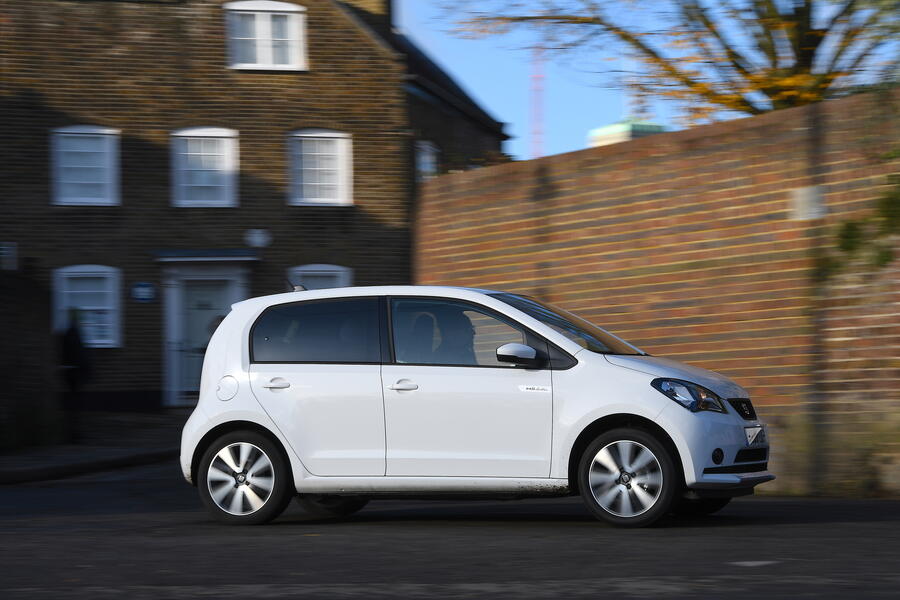
Reasonably plentiful and three-year-old cars with 35,000 miles cost around £9000. Capable and comfortable.
Read our Seat Mii electric review
Family hatchback
Volkwagen ID.3 Life Pro 58kWh – Group 18
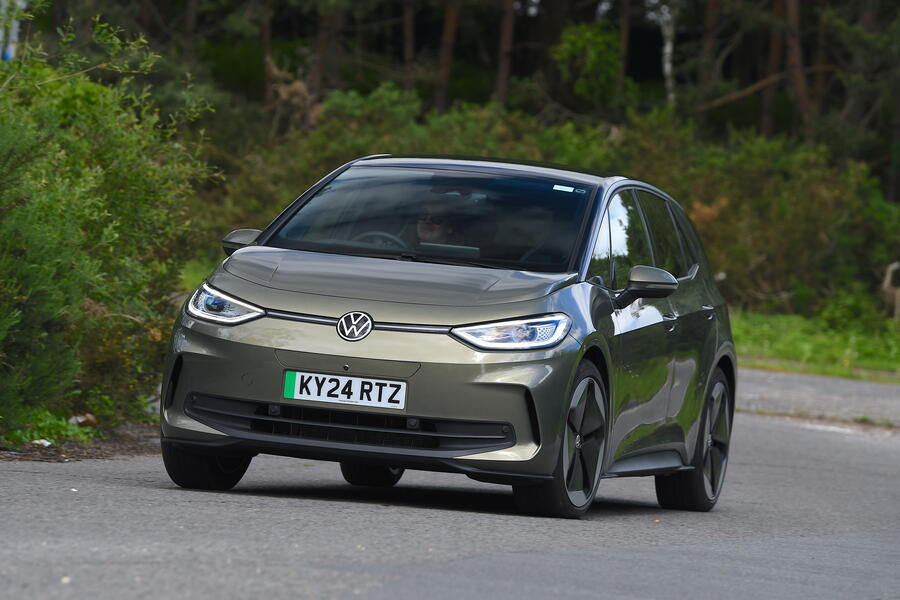
Quite the bargain with one-year-old cars now around £19,500. Nippy, spacious and with a good range.
Read our Volkswagen ID 3 review
SUV
Vauxhall Mokka-e 50kWh Griffin – Group 22
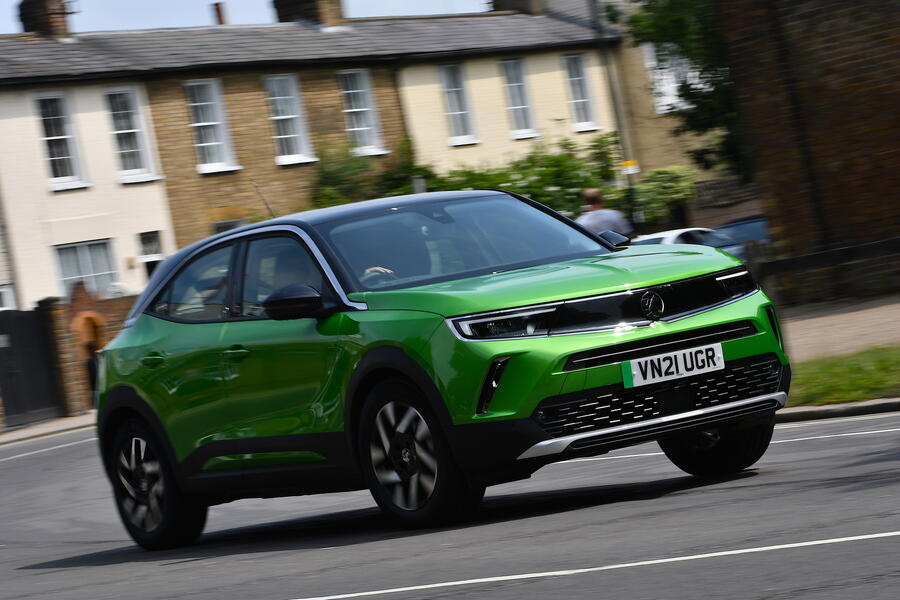
As this is written (May 2024) Vauxhall is knocking £3750 off the price of a new one on a PCP and giving a year or 5900 miles of free charging. Comfortable, quiet and has plenty of kit.
Read our Vauxhall Mokka Electric review
What are the most expensive electric cars to insure?
We’ve gone straight for cars in the highest insurance group but even so, you can expect big differences in premiums at this level related to factors including the car’s value and its theft record.
Family car
Jaguar I-Pace 90kWh – Group 50
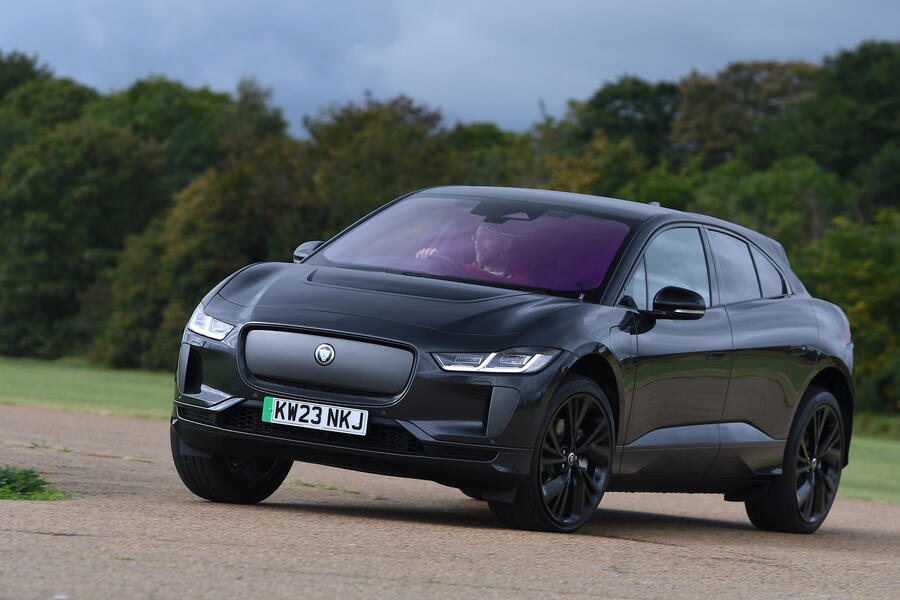
There are some amazing deals on his model (how about £26,000 off a new one?). Great looks, fun to drive and a smart interior.
SUV
Mercedes EQE 500 91kWh Gp 50
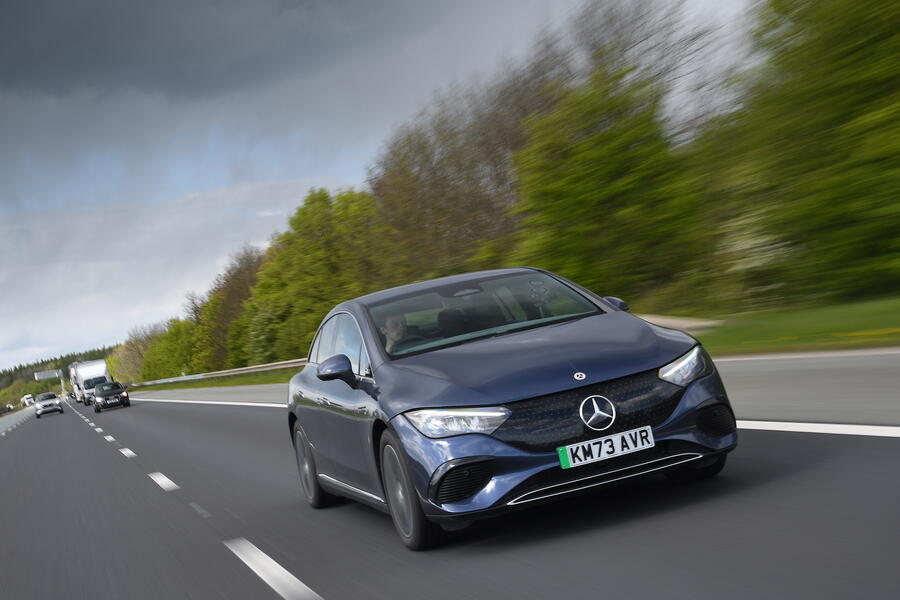
As of May 2024, Mercedes is knocking £9500 off the new price and offering 0% finance. Impressive range, extremely refined and spacious.
Read our Mercedes-Benz EQE review
Sports car
Porsche Taycan Performance Plus 93.4kWh Turbo S – Group 50
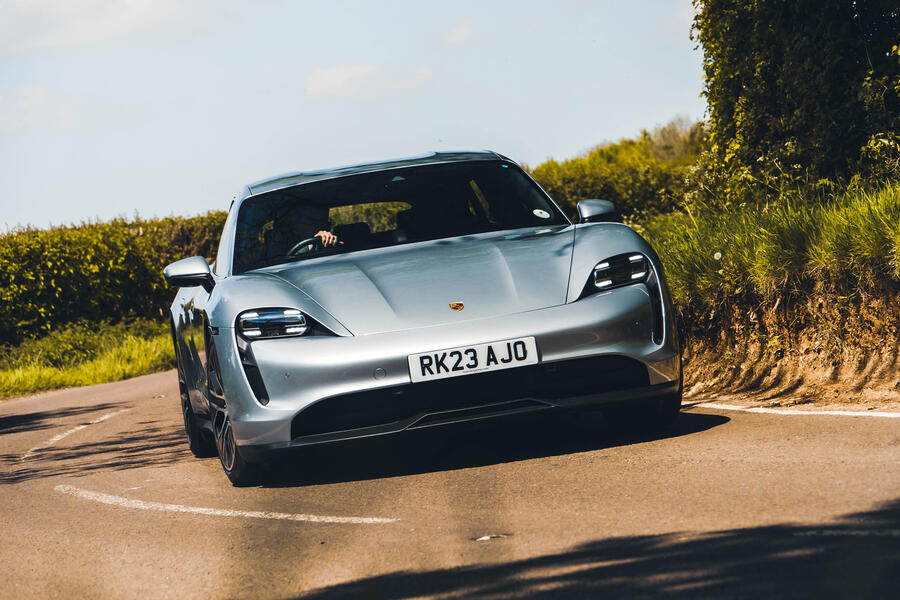
Late-plate cars are cheaper than new ones, which are marginally quicker. Impressive range and performance and a classy interior.