


It’s a great-value hot hatch whose thrills outweigh its flaws. Here’s how to buy one
When the i30 N dropped in 2017 it made quite the splash.
Hyundai’s new hot hatch received rave reviews, gave the Golf GTI and Focus ST stalwarts a run for their money and went on to make up as many as one in five i30 sales overall.
Now, one of the best hot hatches of the era costs from just £14,000, although the best still go for more than £30,000 near what they were when new, such is their desirability.
But first let’s caveat the rave reviews, because not everything about the i30 N quite matched its long-established rivals. Our testers noted its crashy ride, which, when combined with a boosty engine and inconsistent weighting to the steering, made the handling less predictable than is ideal.
That meant we couldn’t rank it above the pricier but mechanically glorious Honda Civic Type R or the less exciting but more rounded Volkswagen Golf GTI. In all other regards, we thought the Hyundai was at the top of its game and offered fantastic value for money.
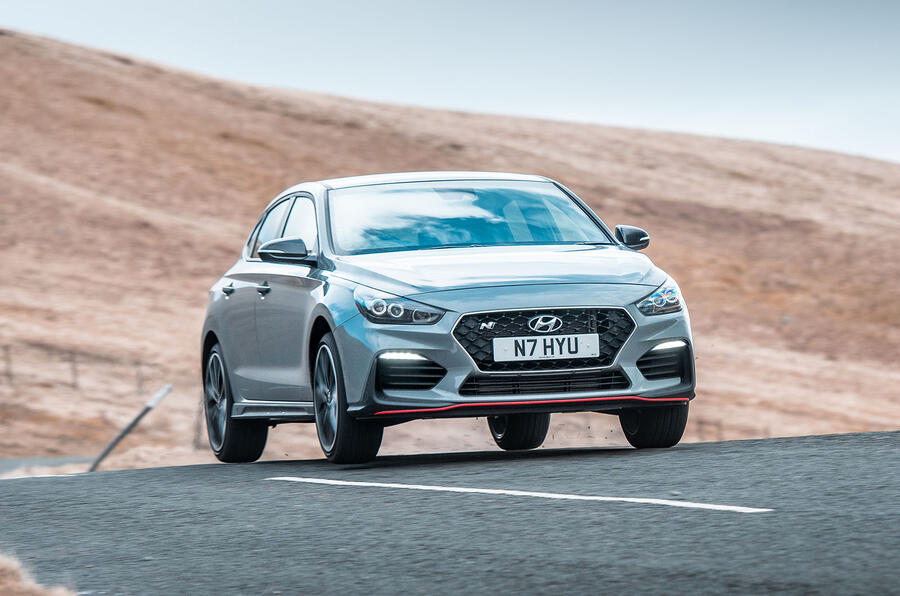
The extensive styling differences from the standard i30 are testament to its performance potential: the front and rear bumpers are more aggressive and decorated with red pinstriping; there’s a neat rear spoiler; and the active exhaust exits through a pair of fat tailpipes. It also sits 8mm lower on its racy alloys.
The 2.0-litre four-cylinder engine was pumped up to 271bhp (putting it midway between the Golf GTI and Golf R), and it drove via a six-speed manual gearbox and limited-slip differential in the most readily available Performance trim. There was a 248bhp entry version, which went without the diff and swapped the 19in wheels for 18s, but it was quickly dropped due to poor sales.
We recorded a very respectable 6.4sec 0-62mph time in a Performance model, but Hyundai reckons the 2021 facelift (which gained 5bhp) could go a second quicker when fitted with the optional new eight-speed dual-clutch automatic gearbox.
Once on the boil it feels faster than that, though, with a swell of turbocharged torque from around 2000rpm which provokes a degree of torque steer, especially in the wet or on uneven roads. It can be destabilising, but some will find this characteristic charming and reminiscent of the 1980s’ hot hatch greats. Short-shifting the excellent manual ‘box is to be savoured, too.
The occasionally unruly front axle and aggressive geometry exposed another chink in the i30 N’s armour: its electrically assisted steering, which doesn’t have the feedback of something like the Civic Type R would. Push to the limit of grip and you will find it remains composed, but it was clearly honed on a race track (‘N’ is for Nürburgring), because the ride is all but atrocious when in the sportiest mode. Leave the adaptive suspension in Comfort and it does an acceptable job of flattening out bad roads, but it’s still a fussy thing.
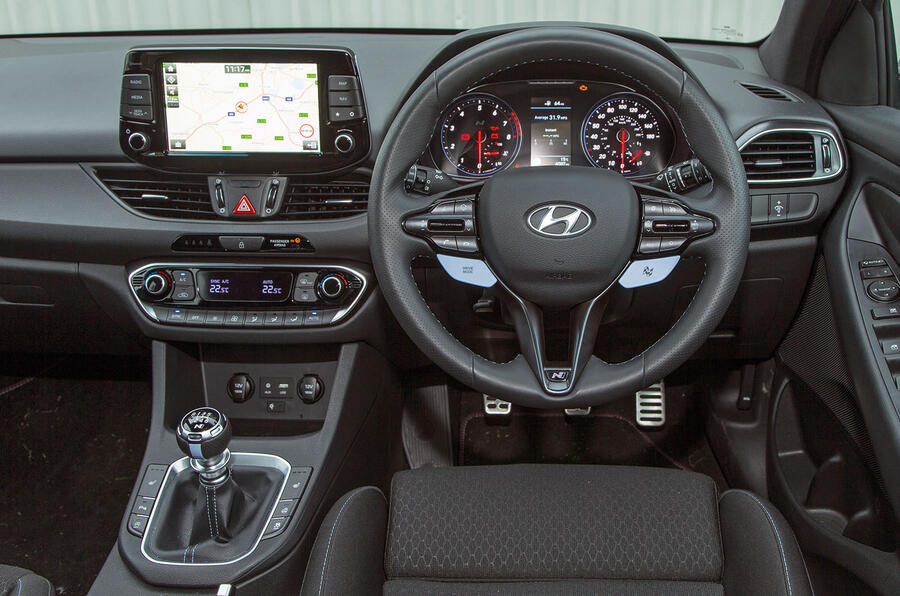
The cabin isn’t a particular strong suit, either, being heavy on the black plastic. It’s well put together, though, plus there is plenty of standard equipment and the seats are very supportive. Ultimately, the i30 N is a ‘heart over head’ sort of car. A contemporary Golf GTI is more polished, more predictable and more comfortable but equally less fun. It’s also a bit too obvious, isn’t it? The more esoteric i30 N has some ‘if you know, you know’ cachet that gives it a dose of cult appeal and lines it up for future classic status.
What to look out for:
Exhaust: Post-2019 cars got a gasoline particulate filter, which toned the noise down. Some owners have removed it or replaced the whole exhaust system, but you might be happier with the quieter soundtrack. Owners have also reported rattling from the valves in the exhaust system. Some Hyundai dealers solved this by overriding the active exhaust and closing the valves. But better to replace the spring in the mechanism, which is the likely culprit.
Clutch: A little judder at low speed, especially in reverse, is normal in the dual-clutch auto while it warms up. Go easy on it to get the most life from the gearbox.
Fuel pump: Stuttering, misfiring or a lack of power could signal that the fuel pump needs to be replaced. Mostly affects 2018 cars; some users report that the problem was actually caused by their battery terminals being loose.
Oil pump: It’s rare, but failing pumps have left traces of metal in the oil. With a prompt flush, long-term damage can be avoided. Change the oil again after a few hundred miles to be sure it’s all out.
Fit and finish: Light rattling from the headlining around the centre light cluster annoys some owners, although it can be fixed by wrapping sound deadening around the wires. Similarly, a creaking windscreen can be solved with added deadening at certain points – the N Cars forum has a guide.
Also worth knowing
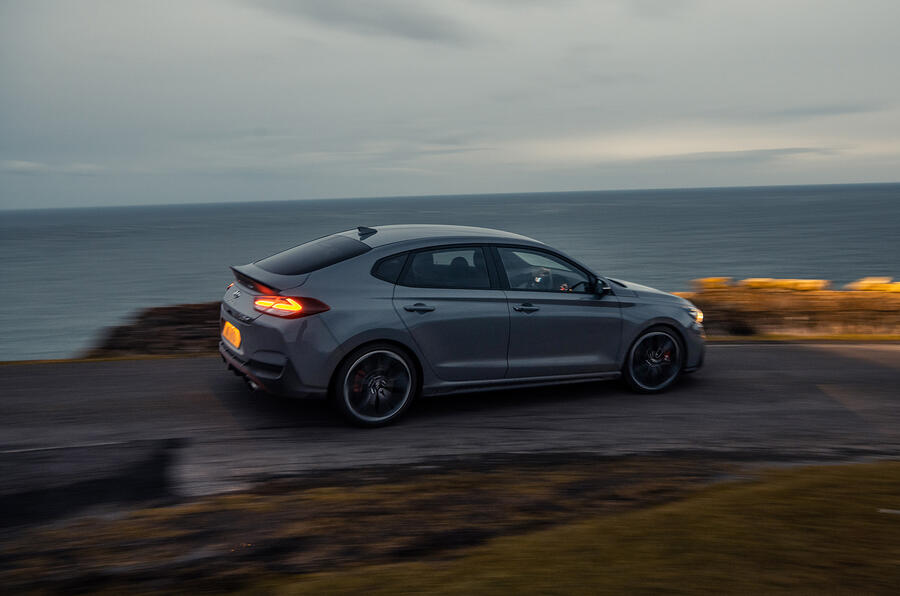
The rarer i30 N Fastback is a little softer and sleeker but a bit heavier. Ultimately you won’t notice much of a difference, so go for it if you want a 50-litre bigger boot and like the look.
A facelift in 2021 brought the optional dual-clutch gearbox, a small power hike, more pliant suspension, some sharp new LED headlights and tail-lights and a bigger infotainment screen with more cabin tech. All in, it’s worth stretching your budget if you can.
Insurance groups range from 27 to 29, with every i30 N costing £200 annually in VED.
How much to spend
£14,000-£17,999 Mostly early high-mileage cars, some of which have been written off or modified.
£18,000-£23,999 Pre-facelifts with good history, around 50,000 miles and a choice of hatchbacks and fastbacks.
£24,000-£34,000 Facelifts and the very last 24-plate cars. Dual-clutchers and manual cars are closely split and worth similar amounts.
An owner’s view
Judey Denyer “My husband and I have really enjoyed our i30 N. It drives very well, has loads of equipment as standard – heated seats and steering wheel – and is comfortable on long journeys thanks to great seats. The only negative we have is that it’s quite thirsty for a 2.0-litre, getting 35mpg. Other than that, though, it has been faultless. We were thinking of changing it next year for something new, out of habit more than anything, but we can’t see anything to replace it with.”